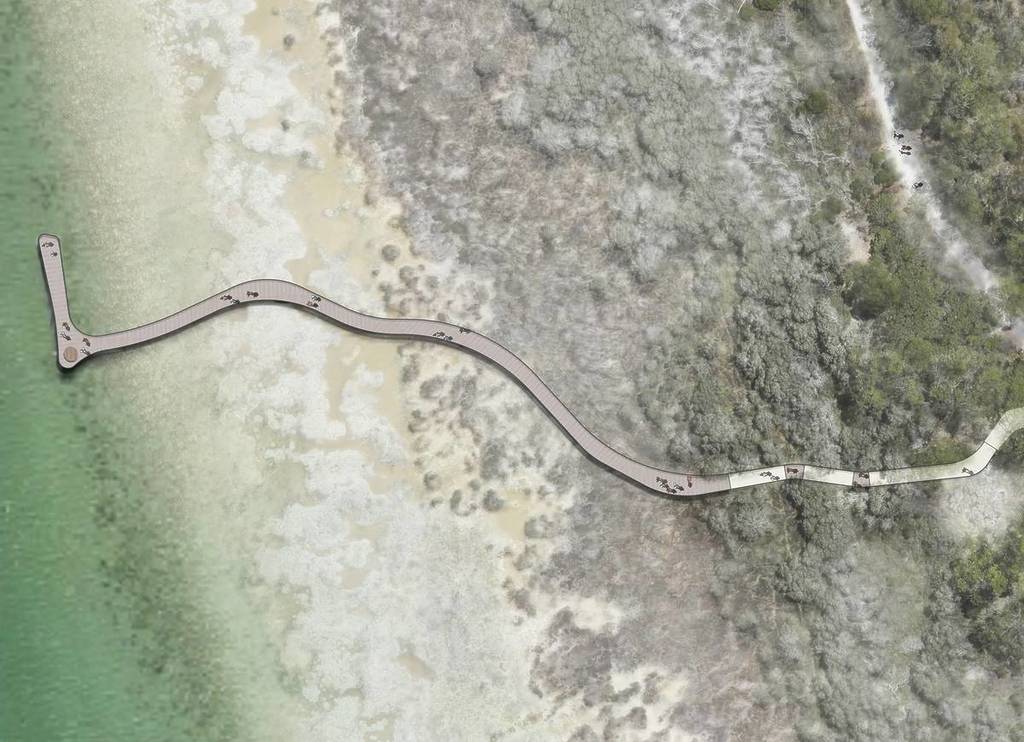

Located just over an hour from Perth, Lake Clifton is home to one of the world’s oldest ecological phenomena. The largest thrombolite reef in the Southern Hemisphere may look like rocks, but it is full of microorganism colonies. Now, a new $3.4 million elevated timber boardwalk will be constructed to see the Lake Clifton Thrombolites up close. This announcement comes 30 years after the first walkway opened in 1996, therefore completing its designed service life.
Lake Clifton thrombolites to get a new timber boardwalk next year
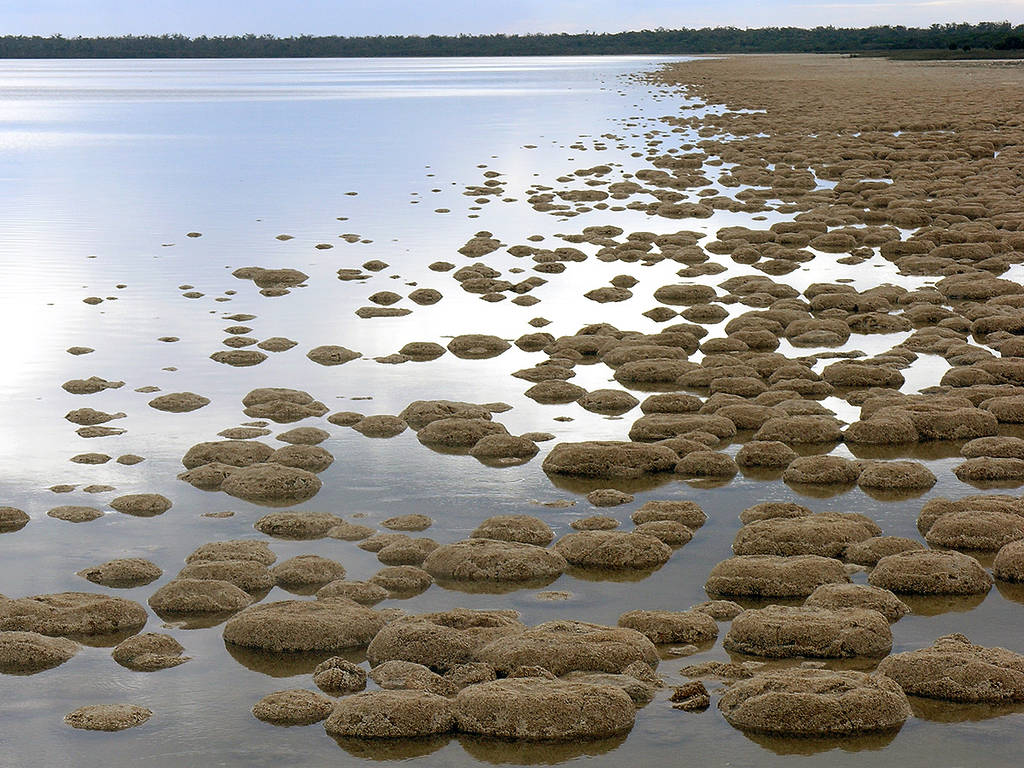
Situated in Yalgorup National Park in the Peel region, Lake Clifton has a population of less than 1000 people. But the 2000-year-old thrombolites ensure visitors make it to the town. The best time to see these natural formations is from January to May during low tide.
With Picton Civil Pty Ltd awarded the tender, the new $3.4 million, 145-metre timber boardwalk and 50-metre concrete connector path are slated for completion by 2027 (weather and site conditions permitting). Apart from the older walkway reaching the end of its life, the upcoming version promises a better view and a lesser environmental impact. They also hope to draw in more guests. A win-win situation, indeed!
A threatened ecological community, the Lake Clifton thrombolites are recognised under the Ramsar-listed wetland of Yalgorup National Park. Apart from the environmental significance, the site is meaningful to the Bindjareb people as Noorook, the eggs of the Wagyl, the creation snake. Therefore, the new design aims to preserve the cultural and ecological importance of the thrombolites.
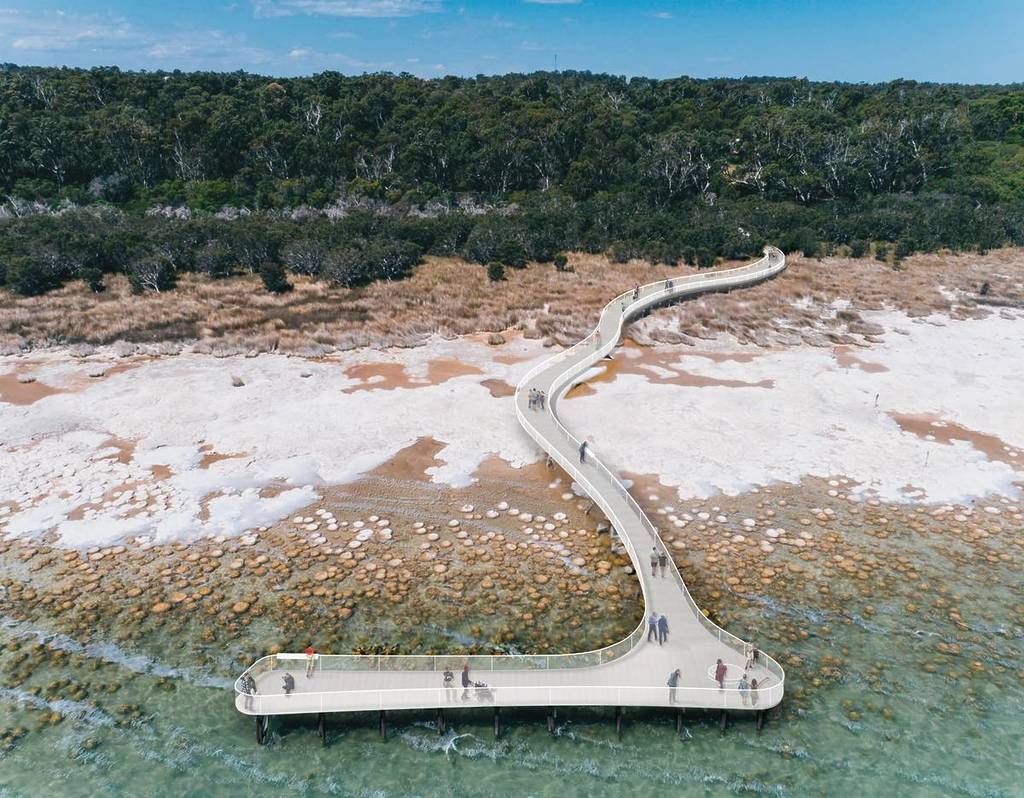
The Australian Government’s Priority Community Infrastructure Program has granted $1.7 million to The Wagyl’s Noorook Thrombolites Boardwalk Redevelopment Project. This is part of an $8 million commitment to the Peel Regional Trails project.
The West Australian Department of Biodiversity, Conservation and Attractions (DBCA) has also extended its support alongside the WA Department of Primary Industries and Regional Development, and the City of Mandurah. As a result, the total investment comes to $3.4 million.